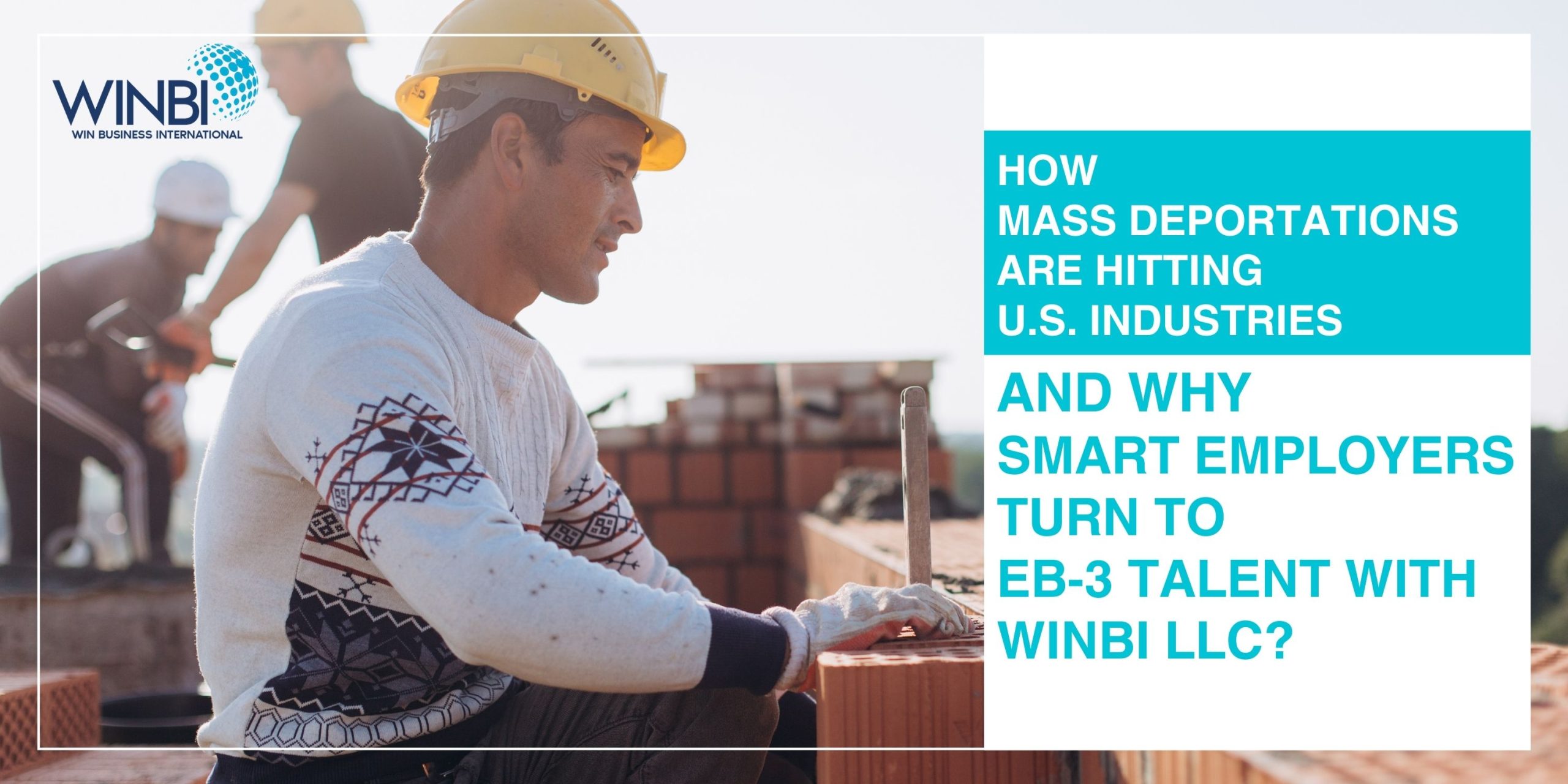
The United States is currently at a crossroads in its immigration and labor policy. A new UC Berkeley and One Fair Wage report sounds a stark alarm: mass deportations and fear among immigrant workers are threatening to collapse core sectors of the American economy, especially the restaurant and hospitality industries.
For employers navigating talent shortages, rising costs, and an uncertain legal environment, the lesson is clear: businesses must adapt strategically or risk stagnation. One of the most proactive solutions is lawful employment‑based immigration — particularly visa EB‑3 hiring — coupled with expert support from trusted partners like Winbi LLC.
1. Why Deportation Policies Are More Than Just a Social Issue — They Are an Economic Threat
1.1. The UC Berkeley & One Fair Wage Findings
A recent report from the UC Berkeley Food Labor Research Center and One Fair Wage warns that intensified deportations and immigration enforcement have driven more than 1.7 million foreign‑born workers out of the U.S. labor force in just four months in 2025, shrinking the total workforce by nearly 800,000. Applied to the restaurant sector alone, that means roughly 137,000 fewer immigrant workers — with projections as high as 310,000 by year’s end.
These are not marginal numbers; they represent significant declines in industries where immigrant labor constitutes an essential backbone.
1.2.Local Impacts Across the U.S.
In cities like New York City, about 60% of restaurant employees are foreign‑born, and many are undocumented, making them particularly vulnerable to enforcement actions. Chicago and Washington D.C. report similar workforce declines tied directly to this immigration shift.
These trends don’t just affect restaurants — entire supply chains, logistics operations, food production, hospitality services, and care sectors depend on immigrant workers for steady operation.
2. Immigrant Talent: The Hidden Engine in American Business
Even beyond hospitality, immigrant labor plays a critical role across industries:
2.1. Food Systems and Supply Chains
Research consistently shows the U.S. food sector — from farming to processing to restaurant services — is heavily reliant on immigrant workers.
Without these workers, not only would labor shortages intensify, but operational costs (wages, turnover, recruitment) would spike and consumer prices could rise dramatically.
2.2. Net Economic Value
Contrary to some political narratives, immigrants contribute more in taxes and economic activity than they consume in services, driving growth across local and state economies.
They increase consumer demand, create small businesses, and often work in sectors where domestic workers are scarce or unwilling to fill roles.
3. Businesses in Peril: What Happens When Labor Disappears
When the immigrant labor pool shrinks, the consequences ripple:
- Business closures become more frequent, especially in restaurants and hospitality.
- Staff shortages force reduced operating hours, lower service quality, and higher operational costs.
- Supply chains crack, as labor shortages extend into food production and logistics.
- Wages rise sharply, which sounds good but often squeezes margins for small‑business employers.
- Economic activity slows as a whole — a loss of labor equates to lower overall GDP and reduced consumer spending.
Think about a neighborhood restaurant — it employs cooks, servers, dishwashers, and managers. If a large percentage of that workforce leaves due to deportation fears, the restaurant must:
- Pay hiring agencies more.
- Increase wages to attract new workers.
- Reduce hours or close temporarily.
- Lose regular customers and revenue.
That’s not theoretical — that’s the reality many U.S. employers are facing right now.
4. Why Lawful Hiring Matters — Both Legally and Economically
Many U.S. employers have traditionally filled workforce gaps informally or without strict verification. That strategy can lower costs in the short term, but it also carries major risks:
4.1. Legal and Regulatory Penalties
Employers who knowingly hire undocumented workers face:
- Fines up to hundreds of thousands of dollars
- Government audits and enforcement actions
- Damaged reputation and customer trust
Legal compliance is not optional — and with shifting federal policies, enforcement is increasing.
4.2. Risks to Business Continuity
When employees are undocumented, businesses risk immediate labor loss if immigration enforcement escalates — which many are experiencing right now.
Operating with legal, verified immigrant employees ensures stability and operational continuity, even if national policy shifts.
4.3. Benefits for the Workforce and Community
Lawful employment supports:
- Fair wages and worker protections
- Tax contributions to federal and local governments
- Better workplace morale and worker retention
5. Employment‑Based Immigrant Visas: EB‑3 vs. H‑1B — What Employers Need to Know
Understanding immigration options is critical for any company seeking long‑term workforce stability.
5.1. What Is EB‑3?
The EB‑3 visa is an employment‑based immigrant visa category that allows foreign workers to obtain permanent resident status in the U.S. through employer sponsorship.
It covers a broad range of workers, including those filling essential roles in industries like:
- Hospitality and food service
- Healthcare support
- Manufacturing and logistics
- Construction and retail
5.2. The Challenge with H‑1B
By contrast, H‑1B visas are temporary non‑immigrant visas reserved for specialty occupations with higher educational requirements. These visas are:
- Limited in number and subject to annual caps
- Expensive and unpredictable due to lotteries, rising fees, and policy changes
- Often more costly in legal fees, training requirements, and compliance
Recent policy shifts have elevated H‑1B fees and made them less attractive for many employers, especially smaller businesses.
The EB‑3 route offers long‑term workforce stability and is often more cost‑effective and predictable than repeated H‑1B cycles.
6. Why Employers Should Embrace EB‑3 Hiring Today
Here are some of the core benefits of using EB‑3 labor lawfully:
6. 1. Consistent Workforce Stability
An EB‑3‑sponsored employee is more likely to:
- Stay longer with an employer
- Build institutional knowledge
- Integrate into company culture
This reduces turnover costs and boosts productivity.
6.2. Predictable Costs
With EB‑3 pathways, employers can budget recruitment and hiring expenses more reliably than with fluctuating temporary visas.
6.3. Compliance and Legal Protection
When properly sponsored and documented, employees are fully legal and protected. Employers also gain protection from audits when using lawful strategies.
6.4. Strong Reputation and Community Trust
Hiring lawfully enhances employer brand — attracting better candidates and building client confidence.
7.How Winbi LLC Helps Employers Hire EB‑3 Immigrant Workers Safely and Efficiently
With ever‑changing immigration regulations, most business owners simply don’t have the time or expertise to manage the process alone. That’s where Winbi LLC comes in.
Winbi specializes in consulting and executing lawful immigration talent strategies tailored for employers in today’s labor market.
7.1. What Winbi LLC Provides
Legal Strategy and Policy Navigation
Immigration law changes rapidly. Winbi ensures you always operate within federal guidelines — minimizing risk and protecting your business.
Verified EB‑3 Candidate Sourcing
Winbi has access to a robust pipeline of immigrant talent who are:
- Ready for lawful employment
- Fully compliant with EB‑3 standards
- Assessed for quality and workplace readiness
End‑to‑End Documentation and Compliance Handling
From visa filing to work documentation and regulatory compliance, Winbi manages the entire process so you can focus on business.
New Hire Orientation and Cultural Integration Support
Winbi doesn’t stop at legal forms — it helps employees assimilate into the workplace and community for better morale and retention.
8. Strategic Tips for Employers Navigating the Current Labor Landscape
Prioritize Legal Hiring Channels
Don’t gamble with unverified labor. Lawful hiring protects businesses from audits, fines, and disruptions.
Plan Workforce Needs Well in Advance
EB‑3 sponsorship can take time — early planning helps ensure continuity.
Leverage Expertise from Partners Like Winbi LLC
Immigration law isn’t static. Having a trusted advisor saves time, money, and operational headaches.
Invest in Onboarding and Training
Helping immigrant workers integrate boosts retention and performance — a small investment with huge returns.
The Future Belongs to Strategic Employers
Mass deportations and labor shifts are real economic challenges for U.S. employers. From skyrocketing staffing costs to supply chain disruptions, the need for reliable labor has never been more urgent.
Immigrant workers have historically powered America’s workforce. Now, more than ever, employers must adapt by hiring lawfully and strategically — not reactively. The EB‑3 pathway offers a viable, cost‑effective route to building a dependable workforce framework.
And when you work with a proven partner like Winbi LLC, you get:
- Legal compliance
- Workforce stability
- Cost‑effective talent strategies
- Peace of mind
Winbi LLC doesn’t just help you hire workers — it helps you build a sustainable workforce future.
Contact Winbi LLC today for a free consultation and start turning immigration policy challenges into competitive advantage.